


A new kind of brand campaign doesn’t live on billboards, magazines, or short-form social media videos. It’s on video games.
In 2021, during the early years of the pandemic, social lives primarily took place on the internet. When attention primarily took a digital form, many can remember the ways that video games were one of the few places where people could interact with one another in a shared activity. Think of Fortnite discord calls that bled into morning, group Among Us playthroughs that streamed on Twitch, or a nightly skribbl.io session played with friends over Zoom.
In a landscape like this, several brands sidestepped traditional physical advertising in favor of campaigns that were native to where social life was going: video games.
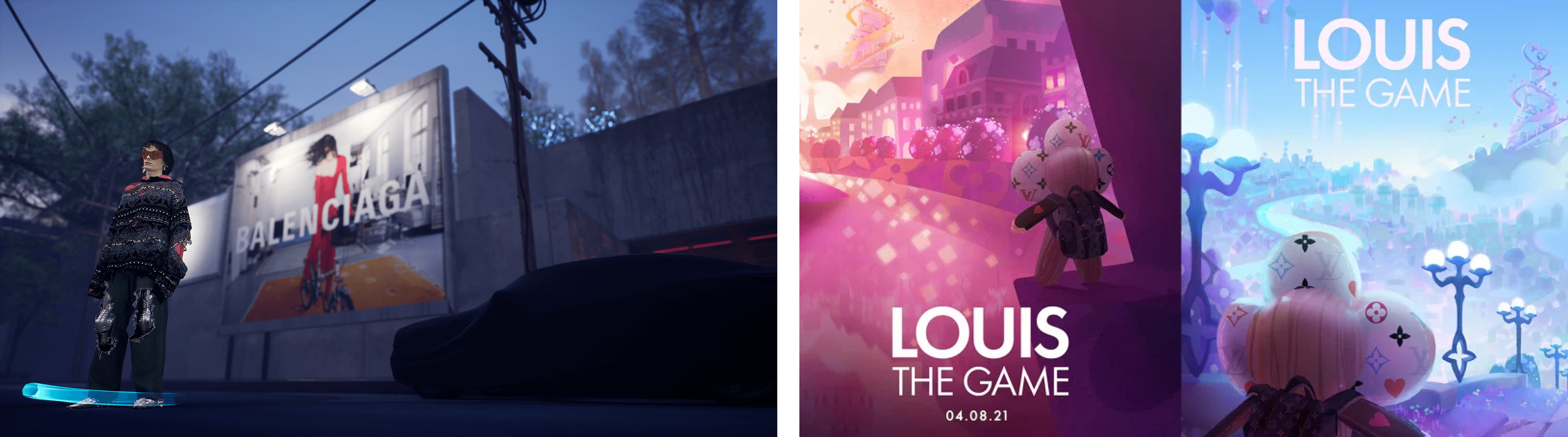
Some brands leaned into in-game activations, creating character skins to build brand love and brand awareness as more people spent time playing video games. As early as 2021, Balenciaga teamed up with Dimension Studio to create Afterworld: “With Fashion Weeks around the world forced online during the pandemic,” the game’s website noted, “Balenciaga imagined the next generation of virtual catwalk shows.” Created using Unreal Engine, the 3D web-based game that served as a digital showcase for the brand’s fall collection in the year when real-life shows could not.
In the same year, Louis Vuitton released Louis: The Game, a retelling of the brand’s history to celebrate the fashion house’s 200th birthday. Released on the App Store, the game spotlights a small, wooden avatar Vivienne, who needs to collect 200 candles to commemorate the birthday of Louis Vuitton. A glowing review from Highsnobiety says, Louis: The Game is “reminiscent of The Legend of Zelda: Breath of the Wild.”
These became known as “advertigames”—where games become advertisements, when global lockdowns forced most of the fashion industry into digital runways and online stores. Four years later, the trend is still running strong.
In November 2025, Gentle Monster released THE ROOM, a survival horror game where players evade a masked killer and uncover clues to unearth new details about the brand’s Fall 2025 collection. The game builds on Gentle Monster’s recent campaign featuring Hunter Schafer, turning a traditional ad into an interactive user experience.
Gentle Monster is joined by several other brands in creating similar activations. Godmode, a beauty brand by Chloë Grace Moretz and Rina Sawayama, uses videogame-style lore for product storytelling and embeds videogame dynamics to each of their product drops. And in anticipation of the 2025 League of Legends World Championship, Riot Games collaborated with Mercedes-Benz to create a bedazzled sculptural rework of the famed Mercedes-Benz CLA model.
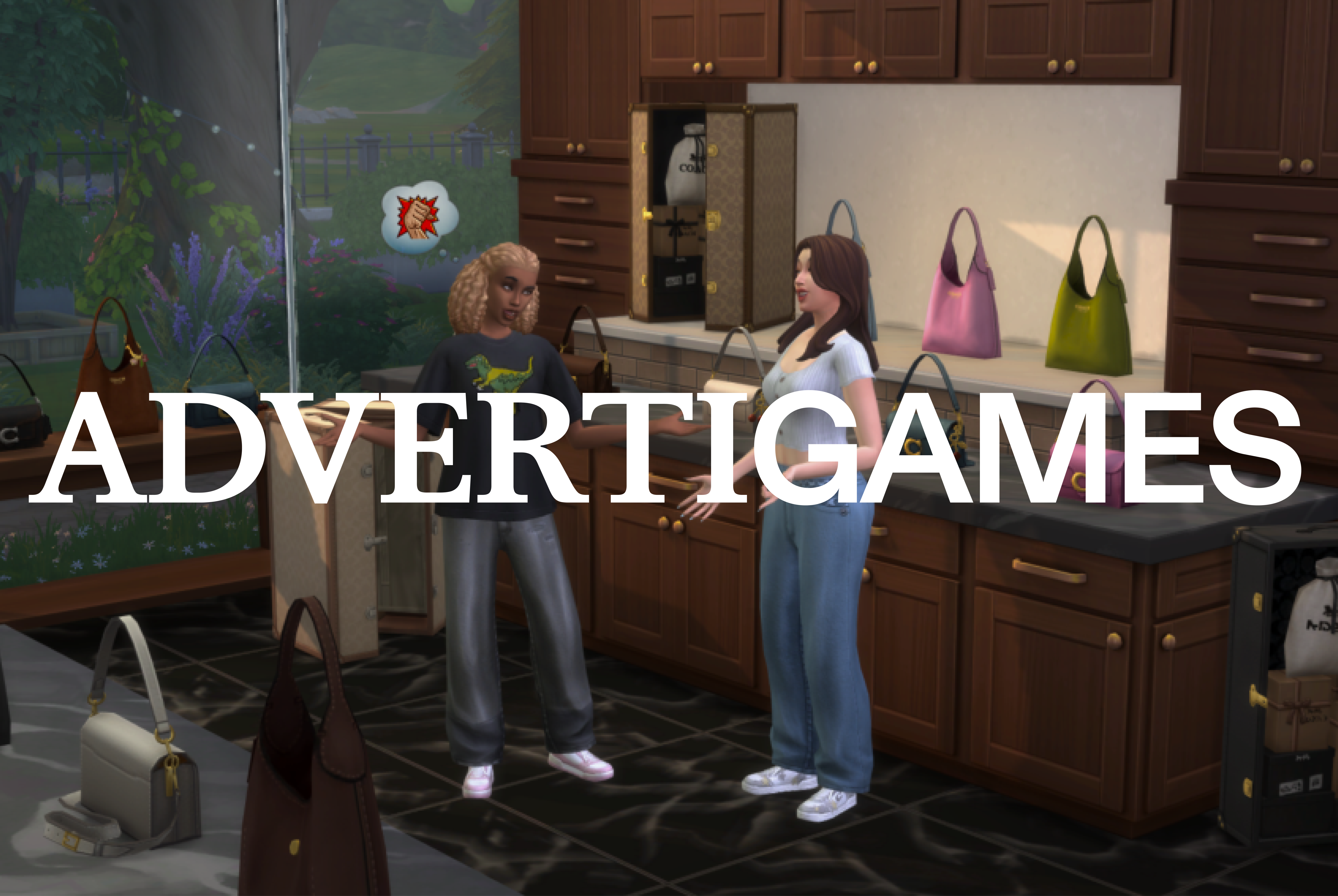
The most recent example, perhaps, is Coach’s recent collaboration with The Sims. In January 2026, the New York-based fashion house collaborated with Electronic Arts to create a free nine-item digital collection for The Sims 4 base game. The collection includes Sim-compatiable items from Coach’s ready-to-wear line, offering 65 different variations for full customization. 3D in-game recreations of the brand’s Tabby and Brooklyn bags were also included as decorative objects, allowing players to use them for their Sims’ homes in-game.
But the most interesting part about this shift is the variety of different sub-genres the “advertigame” entails: it appears in MOBAs, in single-player stories, in battle royals, in life simulators and sandboxes.
That may indicate a wider shift in gaming’s role in society. Traditionally, the activity was once reserved for teenage boys. But according to a report by the Entertainment Software Association, the identity of a “gamer” in 2026 is much more heterogeneous—more mature, and much more diverse in gender: the report finds the average gamer is 41, and almost half are female. Brands looking to expand their reach are beginning to notice, viewing the medium as more than just a pastime for adolescent males, but something that a diverse group of people actually spend their downtime on.
The rise of the “advertigame” also comes at a time when social media channels are in slow decline. Global social media use has been declining since 2022, with engagement rates across Facebook, X, and Instagram steadily decreasing. Human content is increasingly being sidelined by AI-generated posts. This is the rise of the “dead internet theory,” which speculates that most of the activity on the internet isn’t generated by humans, but by bots. It’s not seriously grounded in truth, but it does reflect an all-too-common feeling that brands and creators are experiencing: it is increasingly difficult to reach people through traditional social channels alone.
Video games, however, are fully interactive. Attention is easier to sustain than on a playable game than it is on a For You page. Besides, a video game always needs a human player.
In 2026, we probably won’t see every single brand use video games as an advertising medium. But the “advertigame” signals an important shift. That perhaps the future of the campaign is one where consumers play a bigger role. Instead of speaking top-down, brands can generate closer, more interactive relationships with their audiences to create campaigns with impacts that last far longer than a 30-minute pre-YouTube sequence.