In 2025, toy brands like Pop Mart and Jellycat launched into mainstream popularity. But unlike previous toy sellers (think: Toys R Us) these brands’ target markets didn’t consist of children. They consisted of adults.
For Pop Mart’s globally popular Labubu doll, packaging states that the toy is “Not suitable for persons under 15.” This created a new consumer identity that publications like the Business Insider and trend forecasting agencies like WGSN called the “kidult”: a young adult consumer who uses disposable income to purchase items traditionally considered childish. Much of this was the target of plenty of trendslop—some of it accurate, most of it numbingly repeated ad nauseam: “Labubu as a signal of cultural malaise,” “blind box toy as the death of upward mobility and home ownership,” and “kidult consumers are millennials who refuse to age.”
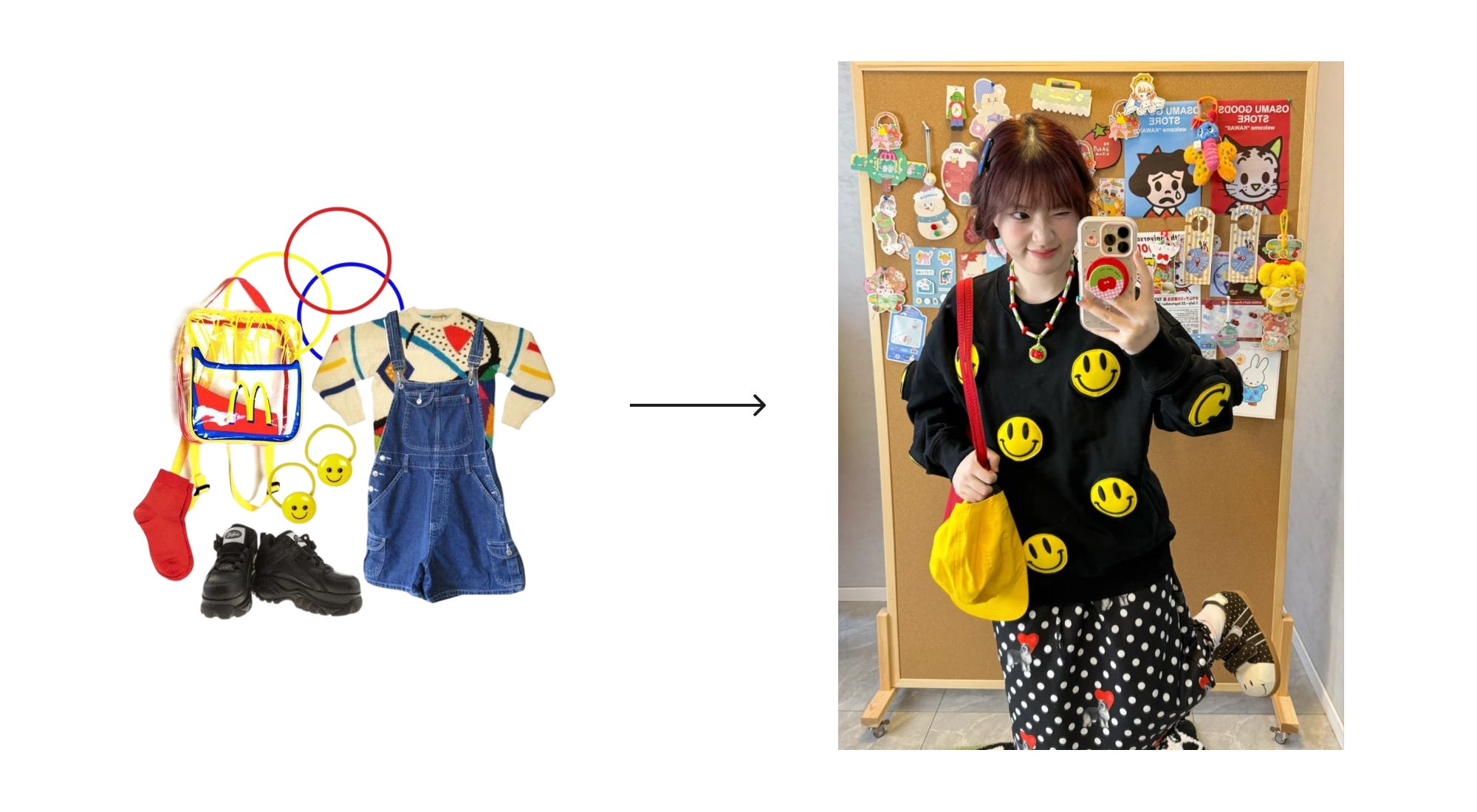
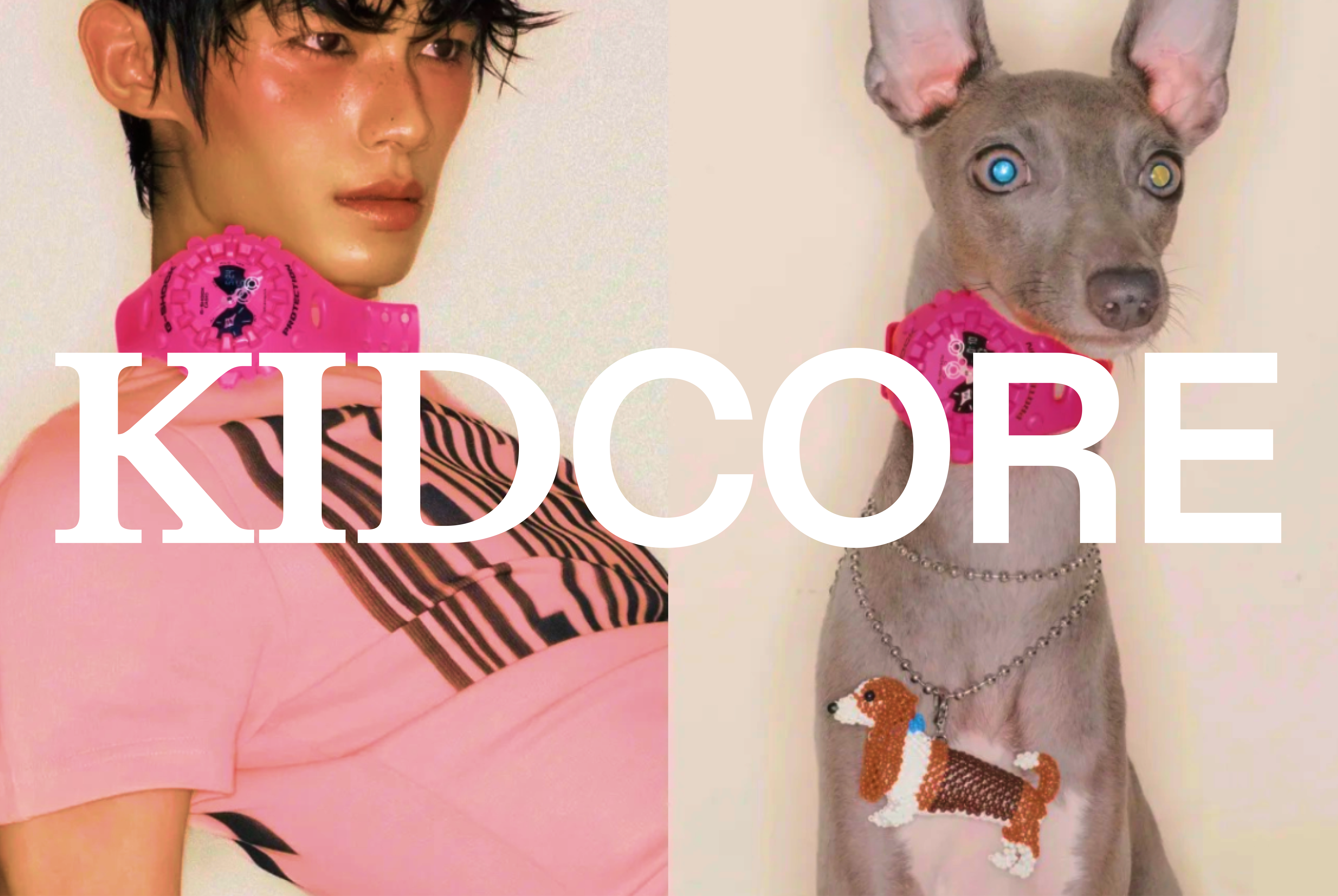
But what might be more interesting about “kidult” discourse is how the mega-trend is shaping other aspects of life. #kidcore is one example of this. It’s an aesthetic that celebrates nostalgia through bright, playful imagery of a childhood in the ‘90s and early 2000s. TV shows like The Powerpuff Girls or videogames like Animal Crossing and Kirby are cited as examples, according to one page on the Aesthetics Wiki.
One domain of #kidcore’s influence is fashion. Think of bright primary colors and a playful mix of textures and patterns. Graphic tees with cartoon characters or tie-dye patterns. Denim or corduroy overalls. Very saturated knitwear. Colorful Converse, Crocs, or light-up shoes. A more-is-more attitude to style.
But this doesn’t reflect the new “kidult”: the young adult with Labubu dolls on their purse or jellycats sitting atop white bedsheets. #kidcore may have its origins in Western media and brands, or in Japanese videogames, but increasingly, China is playing a big role in influencing the aesthetic too.
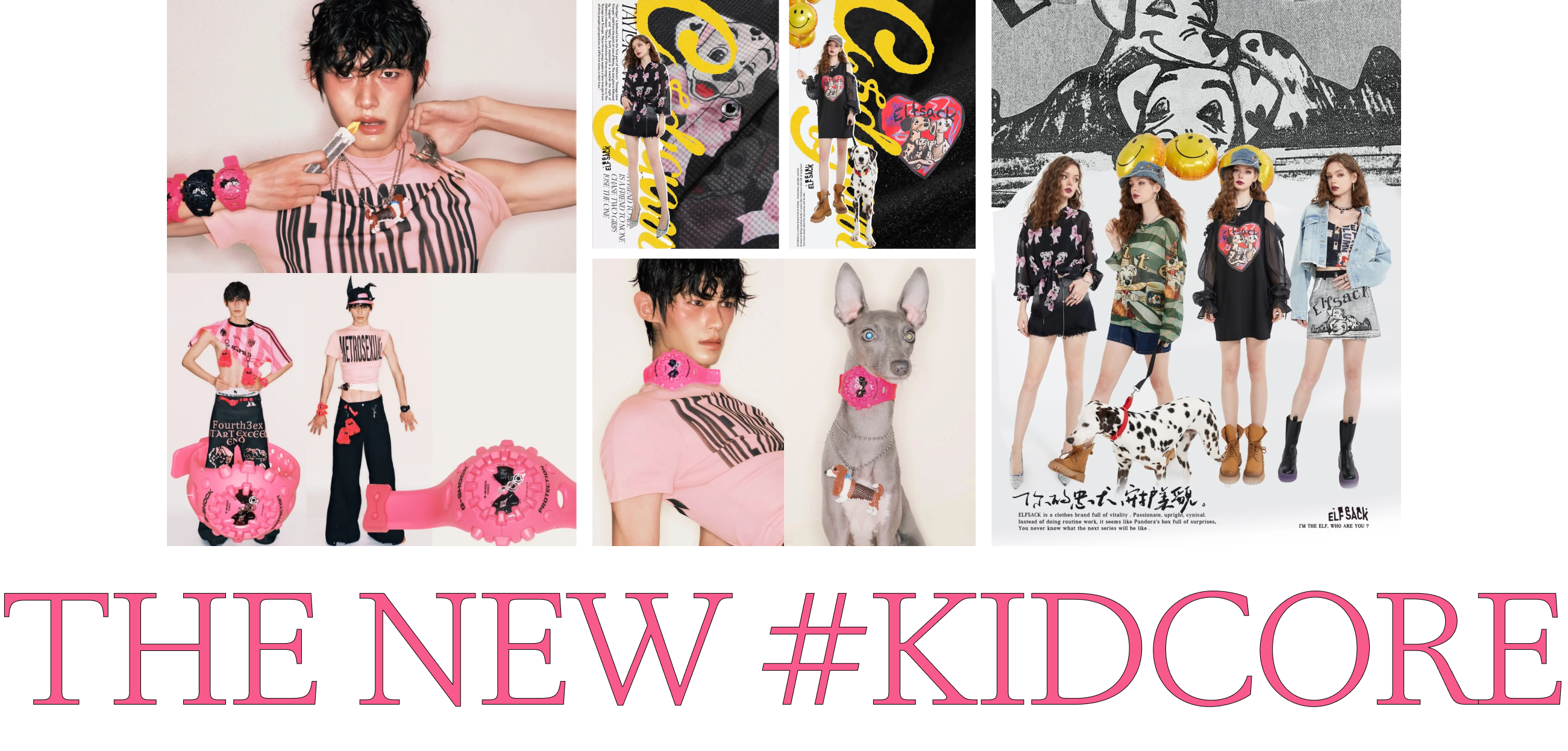
As some creators on RedNote are showing, the new Labubu-influenced ‘kidult’ is actively reshaping the fashion aesthetic. China is taking #kidcore and making it new.
We’ve curated some examples of adults are dressing in child-like ways—in #kidcore, that is. And we’ve compared the aesthetic’s Western- and Japanese-inspired forms against the new emerging way of dressing in China. Categorized as #kidcore on XiaoHongShu, the Chinese version of the fashion trend uses clashing colors, thrifted whimsy, playful charms—and it’s what Jing Daily describes as “perfect for the playground.”
Early #kidcore vs. the new China kidult. How are they different?
We compared #kidcore mood boards on Cosmos against #kidcore outfits on 小红书 / Rednote.
DIVERGENCES
1. Change in symbol. Hello Kitty, Care Bear, Froot Loops make way for iconography that is brand agnostic. Some old symbols remain, but they’re largely remixed or completely new. In China, old references make way for an anarchy of symbols that still align with a sense of child-like play.
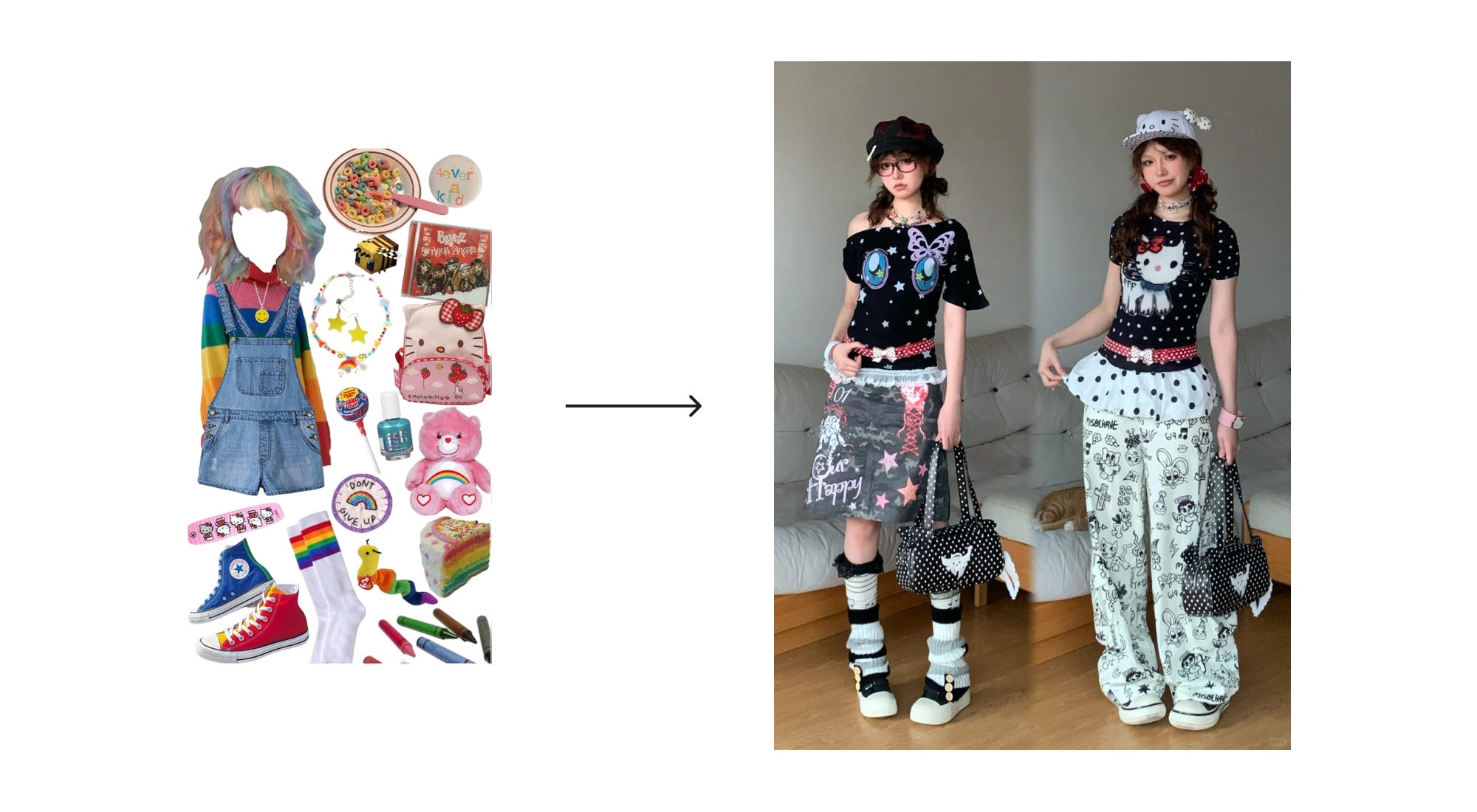
2. Vibe shift. Pastel pink y2k nostalgia core makes way for a more cosmopolitan, more modern style in China.
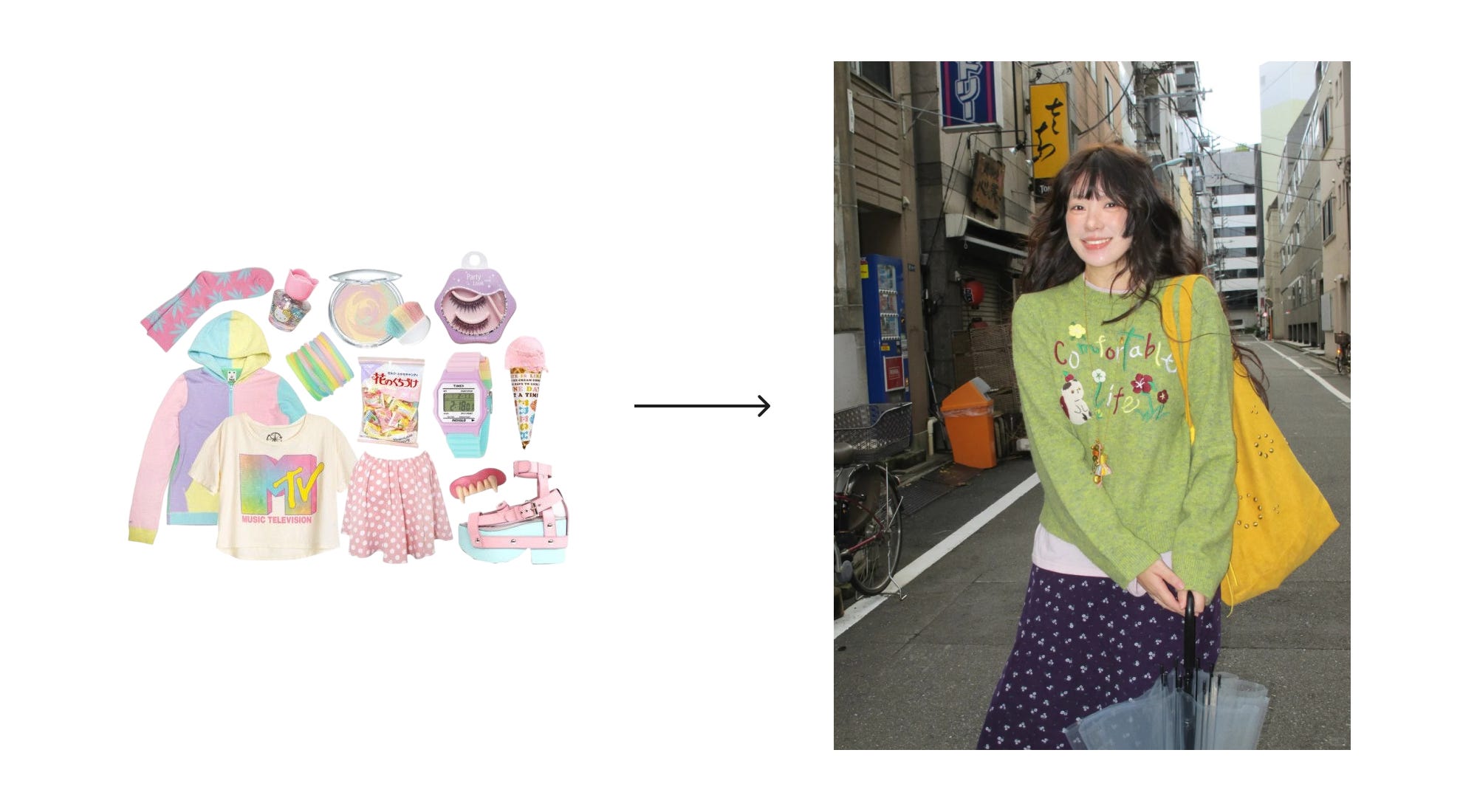
3. Feminine to masculine. Traditionally “girly” high-in-saturation clothes make way for a more neutral style in China (here, “neutral” means both gender- and color- neutral).
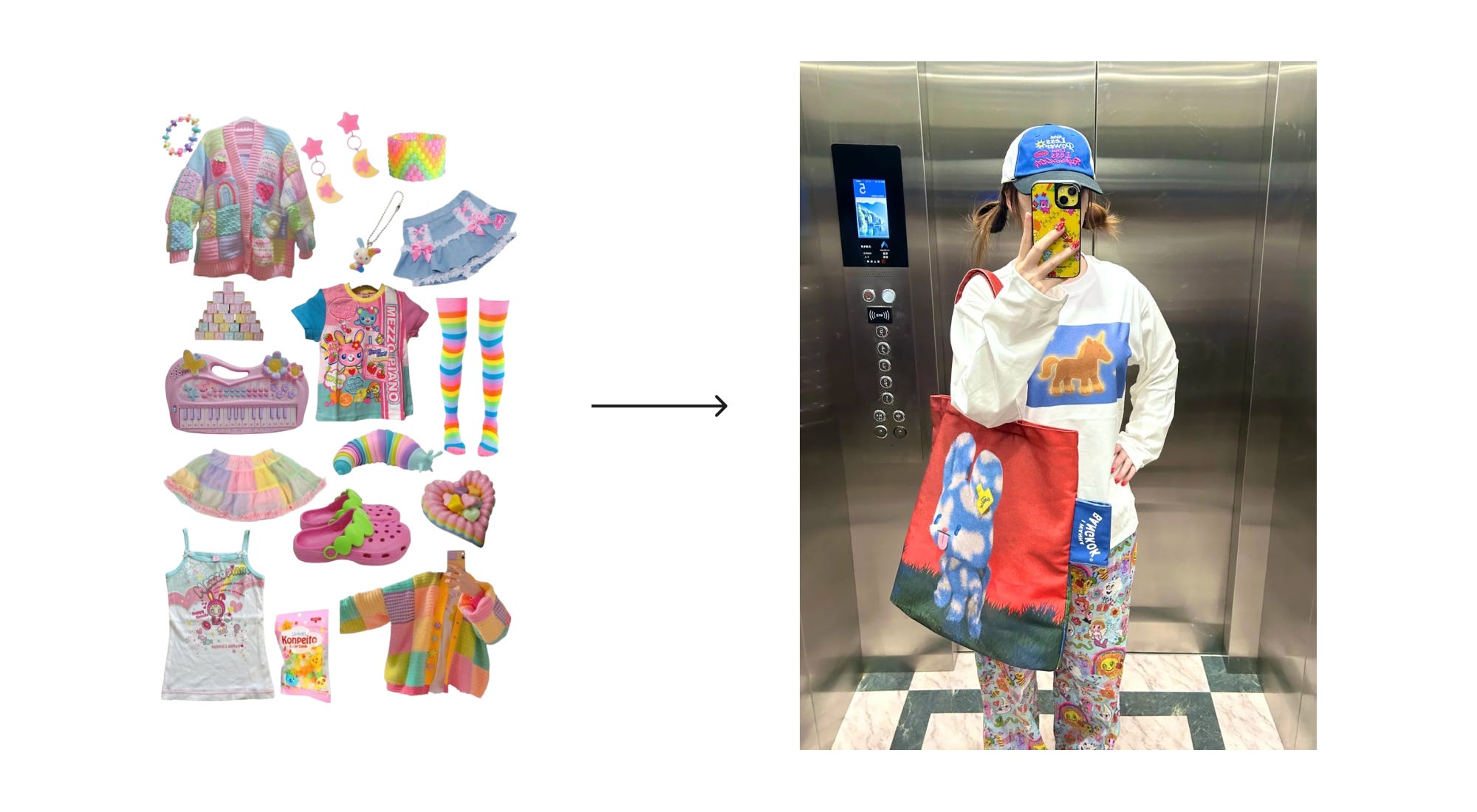
CONTINUITIES
1. For #kidcore, pastel blue is here to stay.
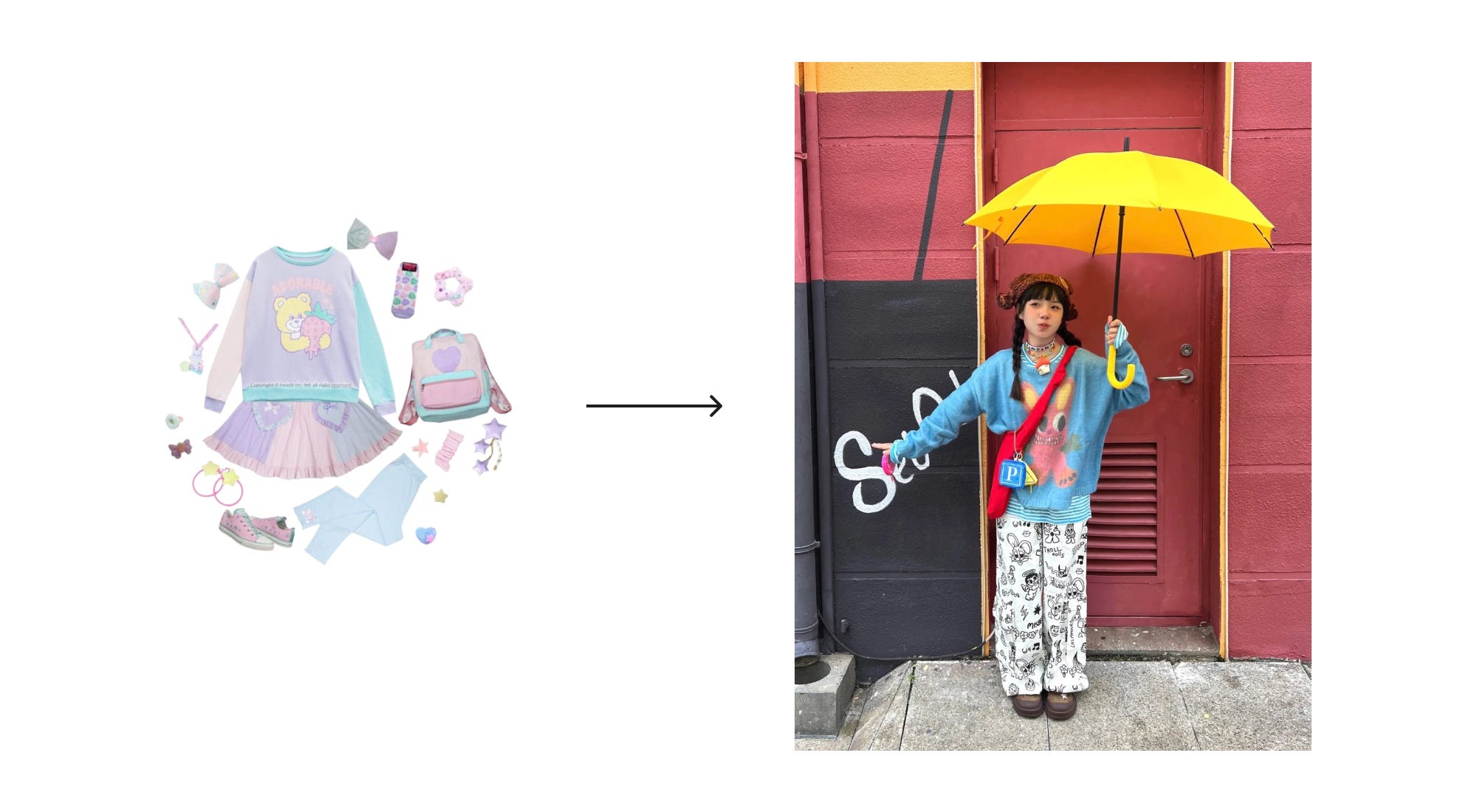
2. Smiley, bright, happy symbols.